
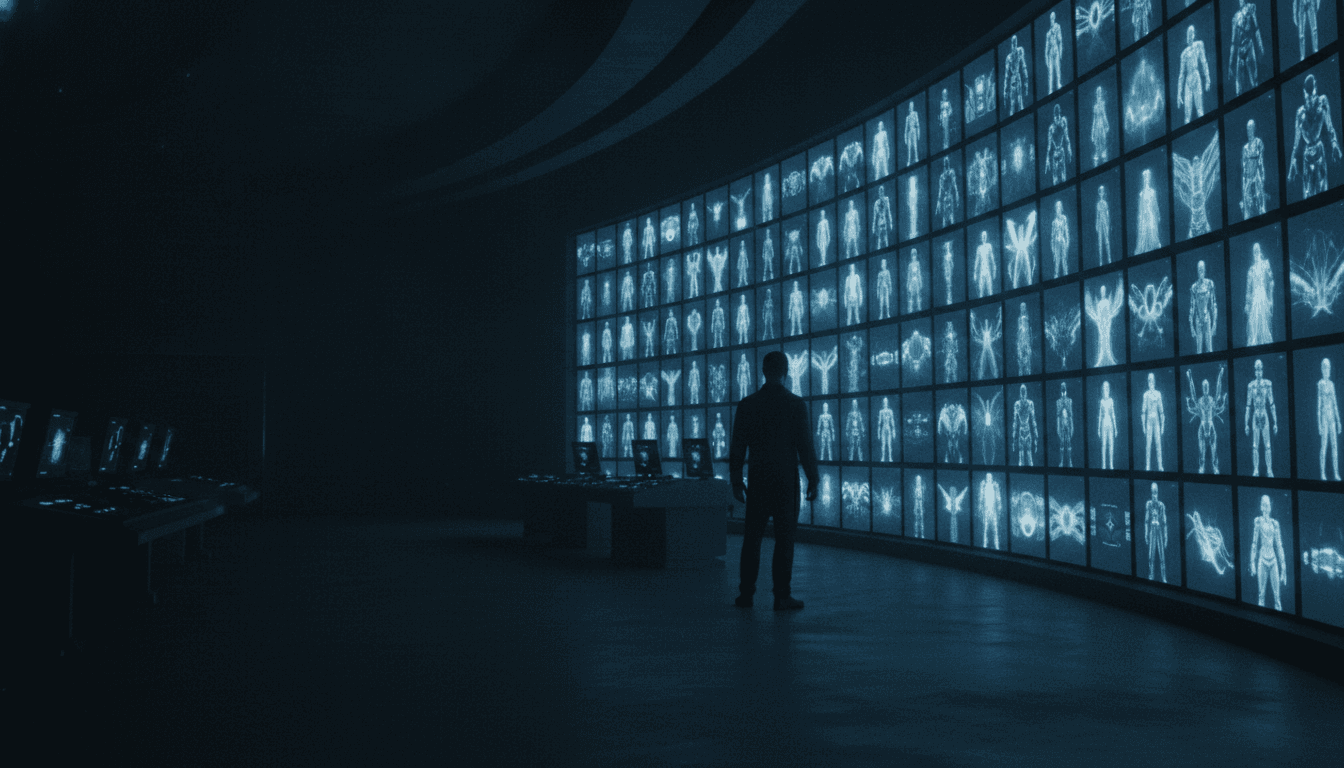
Your company deployed AI. The agent responds. Users use it. The Azure dashboard shows green across the board.
Meanwhile, the model has been inventing dates that don't exist for three weeks, citing regulations that became obsolete in 2023, and calculating discounts based on last week's data. No alarm. No visible error. Nobody knows.
This isn't a technical failure. Nothing is broken. The system works perfectly. The problem is more silent than that: nobody is checking whether what the system says is actually true.
In 2026, that gap has a name: observability.
The Noise That Silence Makes
Imagine hiring someone highly capable, very confident, and always ready with an answer. They do the work, respond fast, never say "I don't know." Seems ideal.
Until someone, three months later, reviews what that person has been doing. And discovers that several reports were based on made-up information, that some recommendations contradict internal policy, and that nobody had noticed because nobody was looking closely.
That is exactly what happens with an AI agent without observability.
Classic monitoring tools measure whether the system is on, whether it responds fast, whether there are network errors. Infrastructure things. But they don't measure whether what the agent said makes sense. Whether the response is correct. Whether the advice it gave a user was based on current data or something it read in a document that no longer applies.
The server responds. The response can be a disaster. And the dashboard stays green.
The Lie Nobody Heard
There are two types of failure in AI systems. The first is visible: the agent crashes, stops responding, an error appears. That gets fixed fast because someone sees it.
The second is the one that really matters: the agent responds, but wrong. And it does so without warning, without errors, without visible signals.
Production data from 2026 shows that between 5% and 25% of LLM responses in real-world use can be incorrect, depending on how it was configured and what information it works with. That's not a theoretical number. It's what happens when your Copilot answers queries from your teams or your customers every single day.
And there's something worse than a one-off error. It's called drift: the moment when the world changes but the agent doesn't notice. The catalog prices were updated. Internal policies changed. A new regulation came into effect. The agent knows none of this because nobody told it, and it keeps responding as if everything is the same as it was six months ago.
Without observability, that degradation only surfaces when someone complains. And when someone complains, the damage has already reached the business.
The Questions Nobody Asked
AI observability is, in simple terms, the ability to ask the system questions about itself. Not just "are you working?" but "what exactly did you do?", "where did you get that information?", "how much did that response cost?", "was your answer consistent with what you know, or did you make it up?".
To answer those questions, there are four types of information a well-observed system records:
What happened, step by step: the question that came in, the documents it consulted, the response it generated. Like a recording of the entire process, not just the result.
How it behaved: whether it took longer than usual, whether it consumed more resources, whether it started failing on certain types of questions more frequently.
The path it took to get there: in a modern agent, a single question can trigger dozens of internal actions before generating a response. Observability lets you see that full path and find exactly which step went wrong.
And most importantly: whether what it said was correct. Not whether it responded fast. Whether it responded well.
Microsoft's Confession
In 2026, Microsoft launched something that says a lot about the moment we're living in: a complete native observability layer for Copilot Studio and all its agents.
Copilot Studio now automatically records every action an agent takes, which tools it used, which information it consulted, and what it responded. All of that appears in the Microsoft 365 Admin Center within minutes, without the technical team having to configure anything special.
And Azure Monitor incorporated an observability agent that lets you investigate what AI agents did using natural language. Instead of manually reviewing technical logs, you can ask the system what happened at a specific moment and receive a complete explanation.
Microsoft also added to its Foundry platform an ROI view per agent. For the first time, those responsible in organizations can see not just whether the agent is working, but whether it's delivering what was expected, how much each interaction costs, and which of all deployed agents deserve more investment.
The fact that the largest enterprise AI ecosystem made this a product priority is not a minor data point.
The Blind Spot
If your organization already has AI in production, or is about to deploy it, there's a quick exercise worth doing:
Do you know exactly which documents your agent consults before responding? Do you have any record of when it started responding differently than it did three months ago? Do you know how much, in real resources, each conversation it has actually costs?
If the answer to any of those questions is "I don't know" or "we don't have that set up", you have a blind spot. And blind spots in AI systems are not technical curiosities. They are business risks without a visible price tag, until someone finds them the hard way.
Observability isn't an extra layer of complexity. It's the basic condition for being able to trust what AI does inside your organization.
The Point
AI made it to production. That already happened. What comes next is learning to keep it accountable.
Observability is the answer to the question every organization should be asking itself: how do we know that our company's AI is responding well, today?
Not tomorrow, when someone complains. Today.
If this kind of content is useful to you, subscribe to the macareno.net newsletter. No spam. No filler. Just what's worth knowing about Microsoft 365 and artificial intelligence in organizations.
Sources
- State of Production AI Engineering 2026 — Pharos Production
- AI Monitoring in Production 2026 — ValueStream AI
- What's new in Observability at Build 2026 — Microsoft Tech Community
- Observability integration for Copilot Studio — Microsoft Learn
- Azure Copilot Observability Agent GA — Redmond Magazine